What should a homeowner do when a luxury automation system starts behaving unreliably?
Scenes that fire late, keypads that go dark, audio that drops in one room: intermittent faults are frustrating precisely because they are hard to describe. Here is how to approach them methodically.
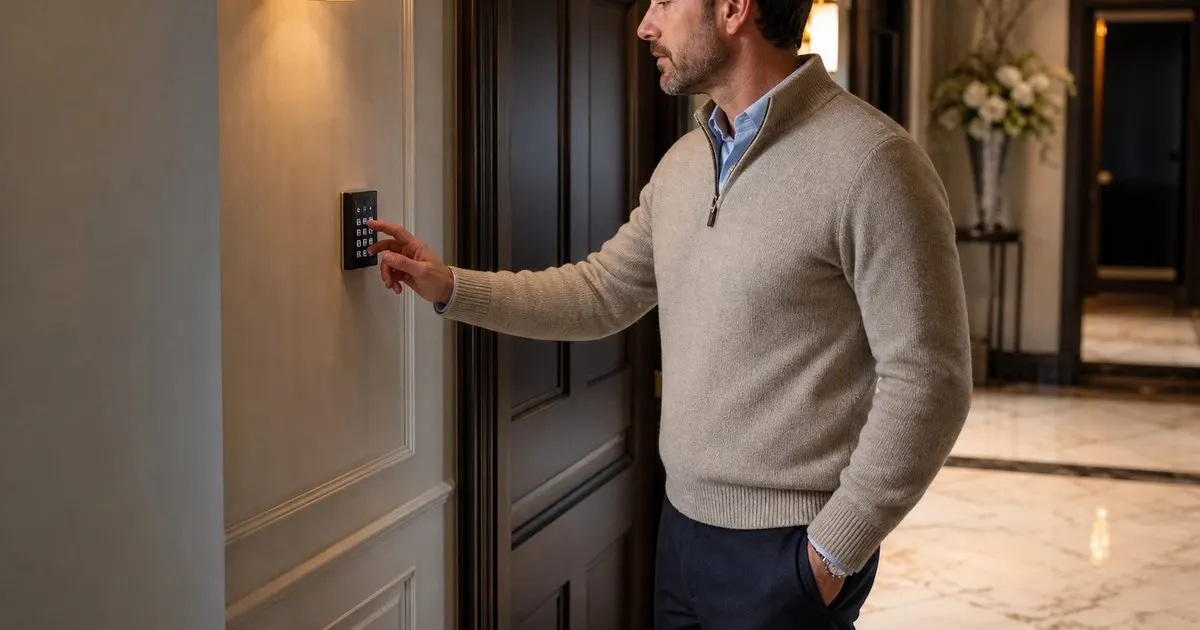
Observe before you act
Intermittent problems are solved by patterns, and patterns require observation. For a week, keep a simple log: what failed, in which room, at what time, and what else was happening in the house. Note whether the failure coincides with a particular scene, a time of day, heavy internet use, a specific device such as a television turning on, or weather. Households are often surprised to find that a fault they experienced as random turns out to happen only in the evening, or only when the outdoor lighting schedule runs, which points directly at a cause.
Resist the urge to reset everything. Power cycling a controller or a network switch can clear a symptom while destroying the evidence a technician needs. If a device is genuinely unresponsive and needs restarting to restore the home, note the time and what was restarted. Also distinguish between failures of a single device (one keypad, one shade), failures of a category (all audio, all shades), and failures of everything at once; each implicates a different layer of the system. Related: What core systems should a premium smart home integration genuinely prioritize first?
Keep reading: How do you plan luxury whole-home automation for a large private residence?, What core systems should a premium smart home integration genuinely prioritize first?, Which control interfaces work best for an intuitive luxury whole-home automation experience?. See how Smarthausr helps you an expert guide to whole-home luxury automation.
The layers most likely to be at fault
In a mature luxury installation, the automation processor itself is rarely the first suspect. The network is. Whole-home audio dropouts, cameras that stutter, and touchscreens that lose connection are classic signs of an overloaded or misconfigured network: a consumer router doing work meant for enterprise-grade switching, wireless access points competing with each other, or a new device the household added that is flooding the network. A second common culprit is power: a failing power supply feeding a bank of keypads or a shade gateway will produce exactly the kind of sporadic behavior that seems inexplicable. Related: How do you plan luxury whole-home automation for a large private residence?
Software is the third layer. Automatic firmware updates on a streaming device, a thermostat, or a lock can break a driver that worked for years. If a fault began shortly after an update, that is a strong lead. Cloud-dependent devices add another failure mode: if a manufacturer's service is degraded, features that route through it will fail even though everything in the house is working. Ask your integrator which parts of your system depend on external services; the list is usually longer than expected.
What you can reasonably check yourself
There are a few safe checks any homeowner can make. Confirm that the internet connection is up and stable. Look at the equipment rack: are the status lights on the switches and power supplies normal, is anything unusually hot to the touch, is a fan that used to run now silent? Check whether the fault is confined to wireless devices while wired ones behave, which points to the wireless network. Check whether it follows a single physical area, which may point to a local power supply or a damaged cable.
Beyond that, be careful. A luxury system is configured deliberately, and well-meaning changes to a router setting or a device app can create new problems that take a technician longer to unwind than the original fault. Do not factory reset anything unless instructed. Do not replace a network switch or an access point with a consumer product, however convenient it seems. If you are comfortable, photograph the rack and the status lights and send them with your log; a good technician can often diagnose remotely from that. Related: Are proprietary or open platforms better for a lasting luxury home automation investment?
Working with the integrator and knowing when to escalate
Contact the integrator with the log, the photos, and a clear statement of impact. Many firms offer remote diagnostics and can read device status, network health, and error logs without a visit, which is often the fastest route to a fix. Ask them to explain what they found in plain language and what was changed. If the fault recurs, ask whether the root cause was addressed or only the symptom; replacing a power supply is a root cause fix, restarting a processor every week is not.
If reliability does not return after two or three attempts, escalate. Ask for a senior engineer to review the design, not just the fault. Check whether the system is running versions of software the manufacturer still supports, and whether the network was ever properly engineered for the load it now carries. Occasionally the honest conclusion is that a component or an entire layer has reached the end of its useful life and should be replaced, which is a budget conversation rather than a service call. A good integrator will say so plainly rather than continue to bill for visits. Related: Why does wired infrastructure still matter in a high-end smart home system?
- Keep a written log of failures for a week before calling anyone; patterns reveal causes.
- The network and power supplies are the most common sources of intermittent faults, not the automation processor.
- Make only safe checks yourself and never factory reset or swap network equipment without guidance.
- If faults persist after a few service visits, ask for a design-level review rather than another patch.

Julien Jimenez
Julien Jimenez is an independent software builder based in Paris. He designs, ships, and operates focused SaaS products for small businesses and independent professionals. Read the full author page.
A Home That Anticipates You
An expert guide to whole-home luxury automation. Smarthausr is built to help you put this into practice.
Plan your homeMore from the Smarthausr blog
How do you plan luxury whole-home automation for a large private residence?
What core systems should a premium smart home integration genuinely prioritize first?
Which control interfaces work best for an intuitive luxury whole-home automation experience?
Get the complete luxury whole-home automation guide
Our full buying guide, the price guide, and new research as we publish it. One email, no spam, unsubscribe any time.