How do you integrate security cameras and access control into a whole-home automation system?
Security in a luxury residence should be thorough without feeling like a fortress. Integration done well makes it nearly invisible; done poorly it becomes an intrusion of its own.
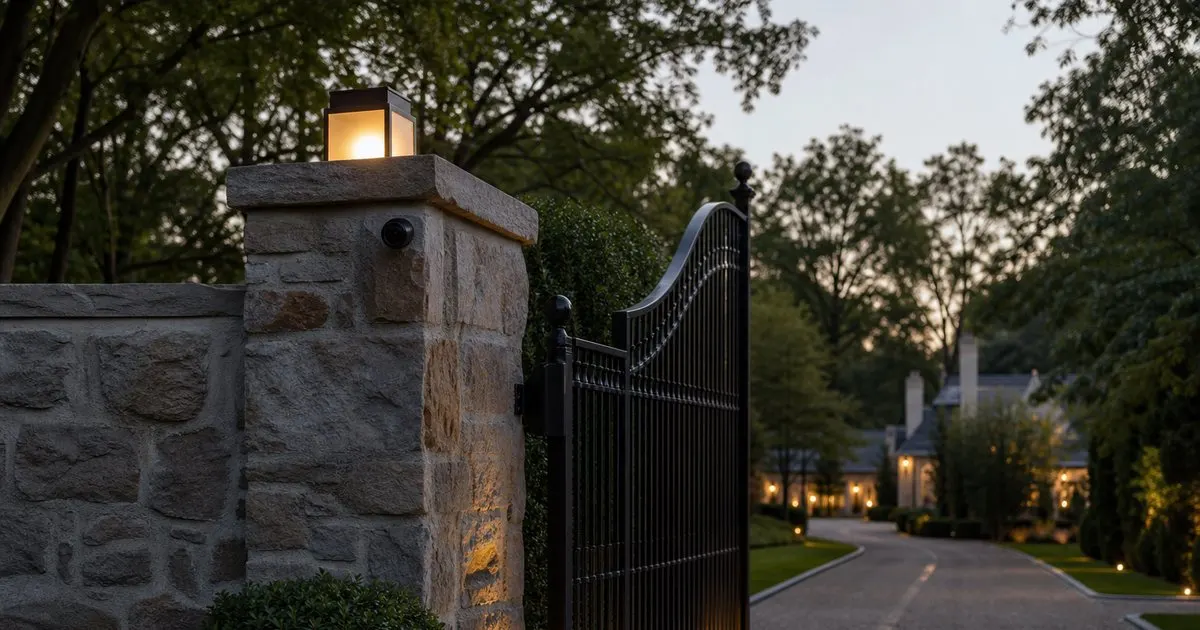
Decide what integration should and should not do
The first principle is that the security system must work on its own. Alarm panels, cameras, and access control should be professionally monitored and fully functional even if the automation processor, the network, or the internet fails. Integration adds convenience and awareness on top of that foundation; it should never be the foundation. When an integrator proposes running door locks or the alarm solely through the automation platform, ask what happens during a controller reboot or a firmware update. The answer should be reassuring and specific. Related: What core systems should a premium smart home integration genuinely prioritize first?
Within that boundary, integration can do a great deal. Arming the alarm can trigger a goodnight scene that lowers shades, sets back climate, and turns off lighting. A gate opening can raise the driveway lights and show the camera feed on the kitchen touchscreen. A door held open can announce itself discreetly. The goal is to fold security events into the everyday rhythm of the home so that the household is informed without being alarmed.
Keep reading: How do you plan luxury whole-home automation for a large private residence?, What core systems should a premium smart home integration genuinely prioritize first?, Which control interfaces work best for an intuitive luxury whole-home automation experience?. See how Smarthausr helps you an expert guide to whole-home luxury automation.
Access control that suits a household, not an office
Access in a private residence differs from a commercial building. There are owners, family, guests, and a rotating set of staff and contractors, each needing different doors at different times. Electronic locks and keypad readers on primary entries, the garage, staff entrances, and sensitive rooms such as a wine cellar or a safe room allow credentials to be issued and revoked without rekeying. Scheduled access for a housekeeper, a temporary code for a caterer, and a permanent fob for a property manager are all routine.
Hardware finish and form matter as much as function. Locks and readers are handled daily and seen constantly, so they should be available in finishes that match the door hardware and be robust enough for exterior exposure. Integrate access with the automation platform so that an unlock event at a staff door can raise the lights in the service corridor and disarm only the relevant partition, not the entire house. And keep a mechanical override on every critical door; electronics fail, and a family should never be locked out of their own home. Related: Why does wired infrastructure still matter in a high-end smart home system?
Cameras: coverage, discretion, and where the footage lives
Camera design in a luxury home is a negotiation between coverage and discretion. Exterior cameras should cover approaches, gates, entries, and vulnerable ground-floor glazing, with attention to lighting at night and to placement that avoids glare and reflections. Interior cameras are a more delicate matter; many households limit them to entries and service areas and exclude private living spaces entirely. Finish, size, and mounting height determine whether a camera reads as an unobtrusive fixture or a surveillance device. Related: How do you plan luxury whole-home automation for a large private residence?
Decide early where recordings are stored and who can view them. A local recorder in the equipment room keeps footage on the property and independent of an internet connection, and cloud backup of alerts can add resilience. Cameras should be on their own network segment, with remote access provided through the automation platform or a secured application rather than by exposing the recorder to the internet directly. Ask the integrator to show you how a family member would review a clip from a touchscreen and how a guest would not be able to.
Bringing it together with one interface and one plan
The measure of successful integration is that the household uses one interface for the whole home. Arming and disarming, viewing a camera, releasing a gate, and checking which doors are locked should all live on the same keypads, touchscreens, and app that control lighting and audio. That requires the security equipment to speak to the automation platform through supported, documented drivers, and the integrator should confirm that the specific combination has been deployed before, with reliable status feedback in both directions. Related: Which control interfaces work best for an intuitive luxury whole-home automation experience?
Finally, treat security integration as a design conversation with the architect and the interior designer, not as an afterthought. Reader placement, camera housings, and the location of the alarm keypad all affect the look of the home. Budget accordingly: a thorough, integrated system for a large residence is typically a substantial five-figure investment, sometimes more for estates with extensive grounds. Where this guide references specific hardware, we may earn a commission, which does not change the principle that the security layer must be able to stand alone.
- Security equipment must function independently; automation adds awareness and convenience on top.
- Residential access control should handle family, guests, and staff with schedules and revocable credentials.
- Camera coverage should be thorough outdoors and restrained indoors, with footage stored locally on a segmented network.
- One interface for security, lighting, and audio is the sign that integration has been done properly.

Julien Jimenez
Julien Jimenez is an independent software builder based in Paris. He designs, ships, and operates focused SaaS products for small businesses and independent professionals. Read the full author page.
A Home That Anticipates You
An expert guide to whole-home luxury automation. Smarthausr is built to help you put this into practice.
Plan your homeMore from the Smarthausr blog
How do you plan luxury whole-home automation for a large private residence?
What core systems should a premium smart home integration genuinely prioritize first?
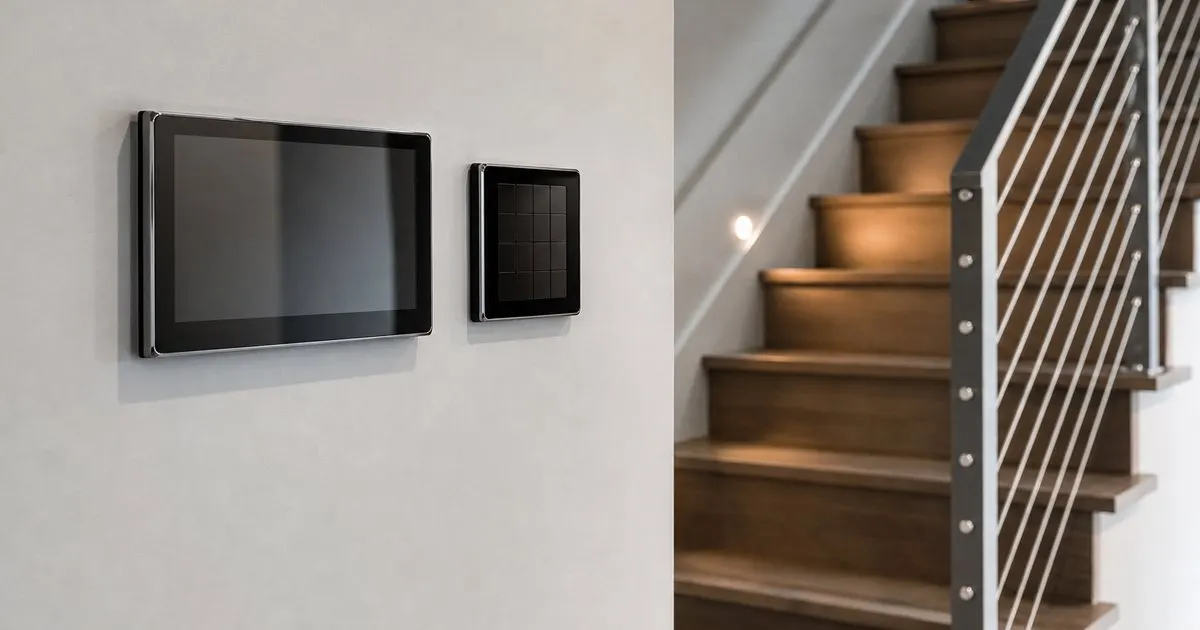
Which control interfaces work best for an intuitive luxury whole-home automation experience?
Get the complete luxury whole-home automation guide
Our full buying guide, the price guide, and new research as we publish it. One email, no spam, unsubscribe any time.