How do you design a dedicated equipment room for whole-home automation hardware?
Every automated residence has a heart, and it is rarely seen by guests. The equipment room determines how reliable, serviceable, and quiet the entire system will be.
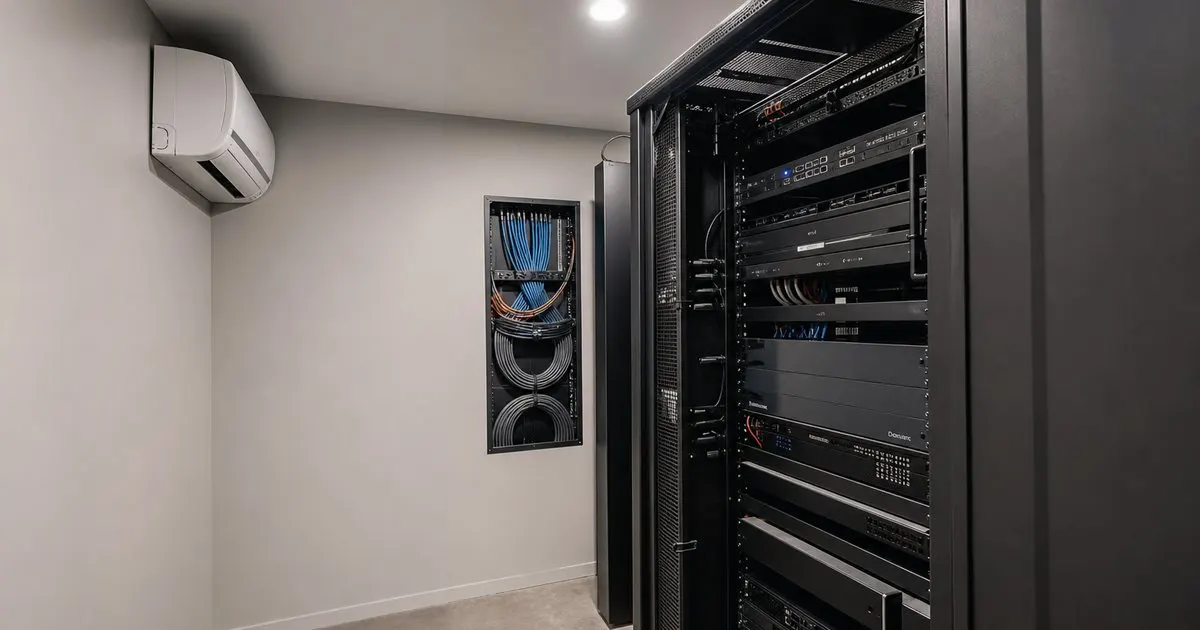
Location and size
The equipment room should be central to the cable runs it serves, on a floor that is accessible without passing through private spaces, and away from bedrooms and quiet rooms where fan noise would intrude. Basements and utility wings are common choices, but the room must be dry, above any plausible flood level, and free of plumbing overhead. In a very large residence or one with outbuildings, a main head end plus one or two satellite closets, each linked by fiber, keeps cable lengths reasonable and simplifies later changes.
Size is routinely underestimated. A single full-height rack with room to work behind and in front of it needs a floor area that surprises many architects, and a large home may need two or three racks plus wall space for lighting panels, shade power supplies, security equipment, and the network demarcation. Plan for at least a third more space than the initial design calls for, and give the room a full-size door; equipment arrives in large boxes and racks are sometimes wheeled in fully loaded. Related: How do you plan luxury whole-home automation for a large private residence?
Keep reading: How do you plan luxury whole-home automation for a large private residence?, What core systems should a premium smart home integration genuinely prioritize first?, Which control interfaces work best for an intuitive luxury whole-home automation experience?. See how Smarthausr helps you an expert guide to whole-home luxury automation.
Power and grounding
The equipment room needs dedicated circuits, more of them than seems necessary, and they should not share with kitchen appliances, motors, or anything that introduces electrical noise. Power distribution within the racks should be sequenced so that amplifiers come on last, and every rack should be fed through quality surge protection and, for the control processor, the network core, and the security recorder, an uninterruptible power supply sized to ride through short outages and to shut equipment down gracefully during long ones.
Grounding deserves specific attention. Audio hum, video interference, and mysterious control faults often trace back to ground loops created when equipment connected together is powered from different circuits with different ground paths. The electrician and the integrator should agree on a grounding scheme for the room before rough-in. Where the home has a whole-house generator, confirm that the automation and network loads are on the protected panel and that the transfer does not cause a reboot cascade. Related: What core systems should a premium smart home integration genuinely prioritize first?
Cooling, ventilation, and noise
Electronics convert most of their power into heat, and a rack full of amplifiers and processors in a closed room will climb to damaging temperatures within hours. The room needs dedicated cooling, whether a small split system, a supply and return from the house's mechanical system with its own thermostat, or, in mild climates, a well-designed ventilation scheme with filtered intake and exhaust. The target is a stable, moderate temperature year-round; equipment fails faster from heat cycling than from steady warmth.
Noise control runs in both directions. Fans and cooling should not be audible in adjacent rooms, which argues for a solid-core door, sealed penetrations, and, where the room borders a living space, an insulated partition. Racks themselves should be arranged with airflow in mind, with heat-producing components spaced, vented panels where needed, and cable management that does not block exhaust. A temperature sensor tied into the automation system, with an alert to the integrator, is an inexpensive safeguard that has saved many households an expensive failure. Related: Which control interfaces work best for an intuitive luxury whole-home automation experience?
Layout, cabling, and the long view
Cabling should arrive at the room through generous conduits or open cable trays from every zone, with slack coiled and every run labeled at both ends. Patch panels for network and terminal blocks for speaker, control, and sensor wiring keep the racks orderly and make changes possible without disturbing a working system. Leave empty conduit to the attic, the basement, and the exterior; the cost during construction is trivial and the value the first time a new run is needed is enormous. Related: Why does wired infrastructure still matter in a high-end smart home system?
Design the room for the person who will service it, not for the day it is commissioned. Good lighting, a small work surface, a place to keep documentation, and clear access to the rear of every rack are what make a service visit an hour instead of a morning. A well-planned equipment room for a large residence, including racks, power, cooling, and finishes, is typically a meaningful five-figure allocation on its own, separate from the electronics it houses. It is the least glamorous money in the project and, in our experience, the best spent.
- Place the equipment room centrally, dry, accessible, and away from bedrooms, with satellite closets for distant wings.
- Provide dedicated circuits, surge protection, a UPS on critical components, and an agreed grounding scheme.
- Dedicated cooling and a temperature alert are essential; heat is the leading cause of premature equipment failure.
- Design for serviceability with labeled cabling, patch panels, spare conduit, and room to work behind every rack.

Julien Jimenez
Julien Jimenez is an independent software builder based in Paris. He designs, ships, and operates focused SaaS products for small businesses and independent professionals. Read the full author page.
A Home That Anticipates You
An expert guide to whole-home luxury automation. Smarthausr is built to help you put this into practice.
Plan your homeMore from the Smarthausr blog
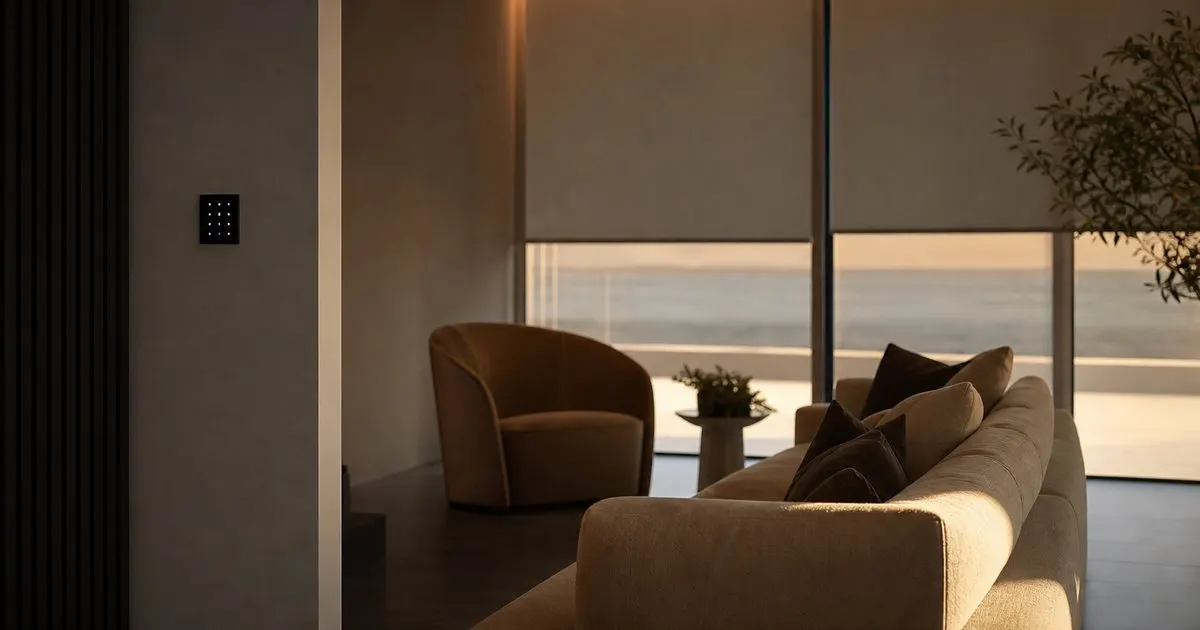
How do you plan luxury whole-home automation for a large private residence?
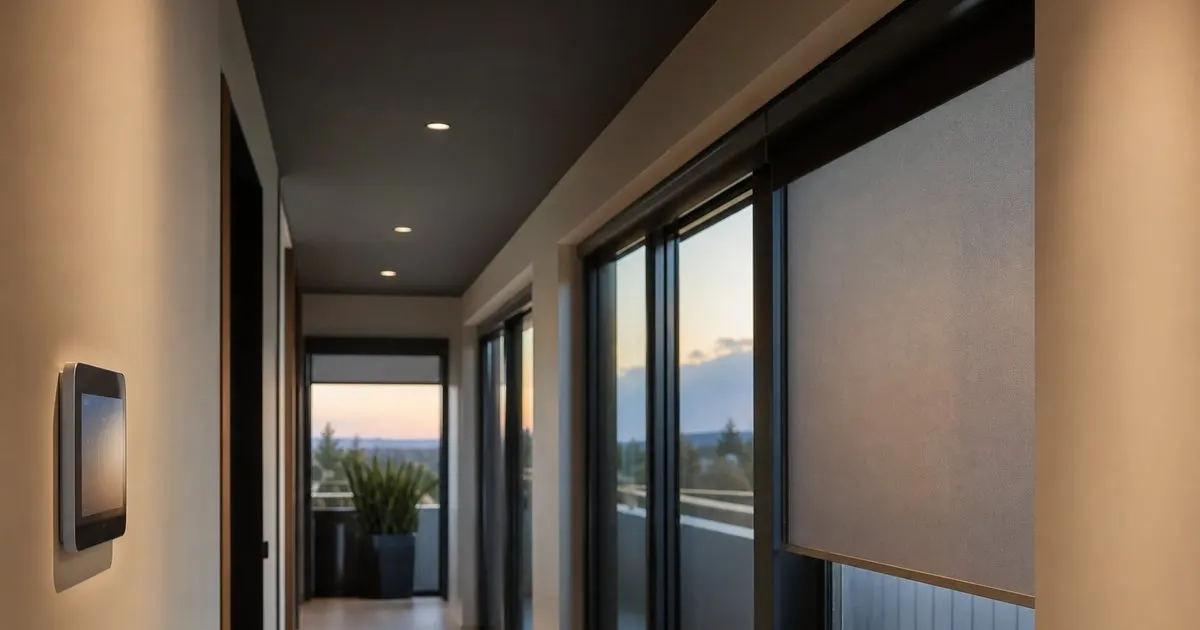
What core systems should a premium smart home integration genuinely prioritize first?
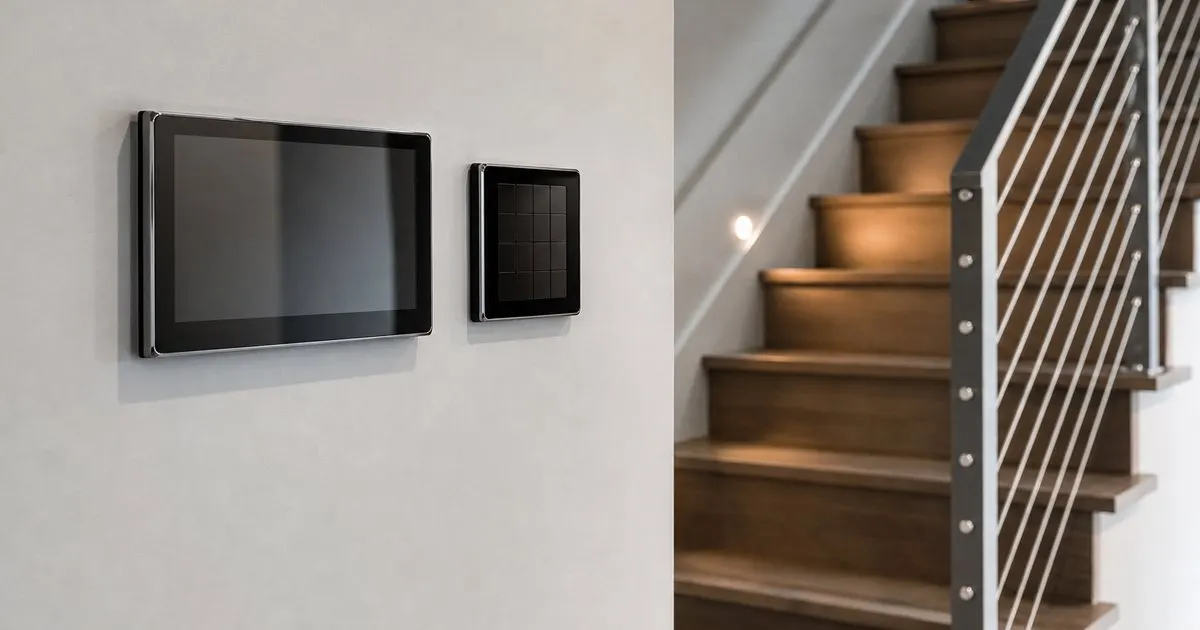
Which control interfaces work best for an intuitive luxury whole-home automation experience?
Get the complete luxury whole-home automation guide
Our full buying guide, the price guide, and new research as we publish it. One email, no spam, unsubscribe any time.